Tamil Nadu has around 30 per cent or more of 'swing voters', and it is this segment that will swing the pre-poll alliance decision, says N Sathiya Moorthy.
The Modi PMO is like none other: It is staffed by people who are so low profile that the only dominant personality is the Prime Minister's.
For the AIADMK, winning the Srirangam by-election without Jayalalithaa campaigning for it, and having Panneerselvam as chief minister, is saying a lot in its favour. But again, a year and more is a long time in electoral politics in the country, and more so in Tamil Nadu, says N Sathiya Moorthy.
The BJP's national leadership seems to have convinced itself that with a weakened, post-Jaya AIADMK for company, they should be able to strike roots before long, and start by winning about 10-15 Lok Sabha seats in 2019, says N Sathiya Moorthy.

'India's military posture has become significantly stronger than China's on the 3,500-kilometre Line of Actual Control.' 'This is enhancing confrontation between the two sides,' points out Ajai Shukla.

From Rohit Sharma's record breaking double century in One-Day Internationals, the team's never-ending woes in overseas Tests, to the controversy surrounding Board of Control for Cricket in India's president-in-exile Narayanswami Srinivasan over the Indian Premier League spot-fixing scandal, Indian cricket had the good, bad and ugly in equal measure in 2014.

There is a political vacuum emerging in Tamil Nadu, but can the Superstar, the state's biggest phenomenon since the late MGR, take advantage of it? Does he have what it takes to enter politics, or is he merely ensuring headlines ahead of his film's release, asks N Sathiya Moorthy.
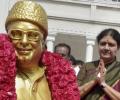
Whatever the circumstances the cadres will not let themselves be seen as challenging 'MGR's symbol'. It's an emotional identification for most of them, and many consider it an 'eternal sin' for them to defy 'Two Leaves', says N Sathiya Moorthy.
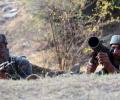
The current trans-LoC operations is a trailer projected to the Deep State that India can throw caution to the winds and calibrate its response.
'High denomination cash notes which was 1.4 lakh crores of Rs 500 and Rs 1,000 notes in 2004 became Rs 15.5 lakh crores in 2016.' 'If it had been allowed, by 2022, it would have been Rs 34 lakh crores, and that would have been the end of the Indian economy.' 'Demonetisation was a huge hit on the head of the economy, but without the hit, you could not U-turn the economy.'
.jpg)
Scooters such as those from Kinetic Motors had become gearless by then and were no more family rides, but peppier individual modes of transport.
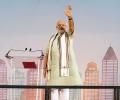
'We are allowing FDI on the terms of the investors, multinationals.' 'We bow down to whatever they say.' 'When they say you open this sector, we open that sector.'
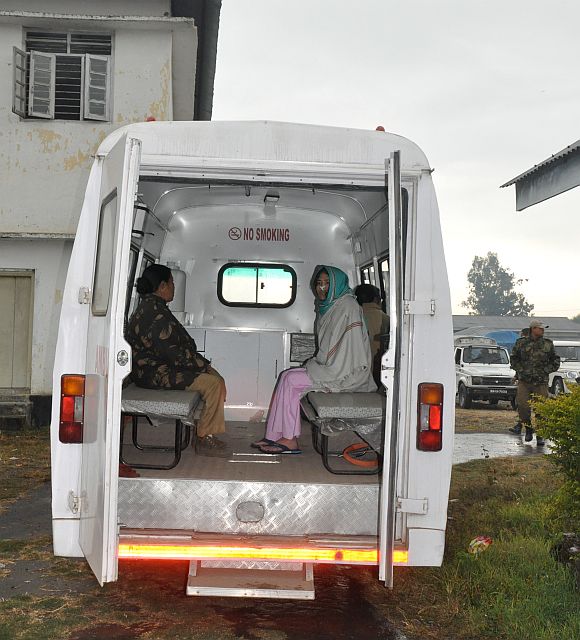
On the occasion of her breaking the world's longest hunger strike, Rediff.com reproduces this 2011 feature on the activist and her life.
.jpg)
SpiceJet's ex promoter Ajay Singh is trying hard to pump in huge money into the airline.
In an interview to Rediff.com's Anita Katyal, Shambhu Srivastava speaks about the need of breaking out of the communal-secular paradigm and focusing on the Congress party's poor performance and its track record in fuelling communalism.

It asked all nations to work together to expedite the adoption of the Comprehensive Convention on International Terrorism in the UN General Assembly without any further delay.

Why has a nation created on strong secular principles slowly chipped away those essential values? Why are so many Indians willing to compromise their freedoms and those of their compatriots for the cause of economic progress and to see a shining India,' asks Aseem Chhabra.
Right from the beginning, the State abdicated its responsibility in fixing the blame for the Hashimpura massacres or getting justice for the victims.

When it comes to the winning strike rate, Lalu Prasad Yadav's Rashtriya Janata Dal has emerged victorious on eight of every ten seats it contested while only one of the every three Bharatiya Janata Party candidates managed to win.
After working on Mr India and Sagar, Partho Sen-Gupta left to study filmmaking in France at 26. He returns with the dark and moody Sunrise.

'Today the Chinese think they can slap India, and there will be no consequences.' 'They must be made to feel the consequences through any and all means,' says Rajeev Srinivasan.

From being the hand-picked choice of Sonia Gandhi as Andhra Pradesh chief minister to sitting on a dharna in Delhi against division of the state, Nallari Kiran Kumar Reddy has turned from a Congress regional leader to a disgruntled rebel in his nearly 39-month tumultuous tenure.

Nehru decided to build The Ashok in New Delhi to host a UNESCO conference. For a prime minister focussed on India building with projects like the Bhakra-Nangal Dam, IITs and factories, "the hotel spoke of the gumption of the country at that time." Manavi Kapur traces the eventful journey of the hotel, which has now completed 60 years.

'Consider this image of today's youth in Bihar -- armed with a bike, a smartphone and possibly some illegal arms too, imbibing incessant stream of images from the Internet and television.' 'Some of them would turn into gau bhakts, some would listen with interest the exploits of Salafism, dig deep into the Internet to come out with images which cry vociferously that their respective religions are in danger.'

These Indian companies truly defined the essence of entrepreneurship.

There comes a moment in all great sporting careers when the puzzle fits together and for Kei Nishikori it arrived on a sweltering early September afternoon in New York.
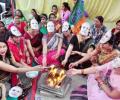
If the wave has become a tsunami, why is the BJP's prime ministerial candidate playing safe by polarising voters along communal lines, asks Bharat Bhushan.
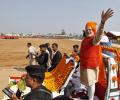
Namo, Namo as India's prime minister? Not yet, says Pakistan-based journalist Amir Mateen.

The fruits of election boycotts are harvested not only by the separatists but also by beneficiaries across the democratic divide, points out Mohammad Sayeed Malik.

Nita Doshi and Devashish Sharma share a common goal to help poor patients who cannot afford treatment for cancer.
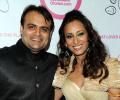
This is the first time the fight is between mother and son. Both sides don't look in the mood to relent: Advisors and spin doctors have been hired, lawyers have been consulted.

State after state has imposed an alcohol ban, and has had to retreat, unable to address the financial and administrative fallout. Are we set for more of this cycle, asks Aditi Phadnis.
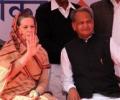
A profile of Rajasthan chief minister Ashok Gehlot.

'Smita had it all planned out. She was pregnant then and planning to leave Raj Babbar after the baby was born. In an enthralling new book Smita Patil, A Brief Incandescence (HarperCollins), Maithili Rao reveals the many fascinating facets of the incomparable actress whom we lost too young.
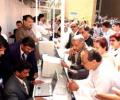
India needs to come up with new ideas to make the Pravasi Bharatiya Divas more appealing to overseas Indians. The Diasporas talents should be used for the country's development, says Thomas Abraham, founder of the Global Organisation of People of Indian Origin

'The darkest days of Indian democracy were (during) the Emergency when basic democratic rights were suspended. For a time it seemed as though India would move along the East Asian model -- everybody works hard, nobody asks questions, certainly not of the government.' 'There are people who say we are headed that way, but I am not persuaded by the evidence,' says Mahesh Rangarajan who recently resigned as director of the Nehru Memorial Museum and Library in New Delhi.

It is rare for communal riots to spread to rural areas. The UP riot is the first time after the September 1969 Gujarat riots that a rural area have been affected. Electoral politics which divide society in majority/minority, going on since the early 1990s, is a major contributing factor to this heightened tension between communities, says Colonel (retd) Anil Athale in the first of a two part series.

Hers is a rags-to-riches story for the ages, peppered with risks, determination and strokes of luck.

What went on inside Kolkata's 'house of horror'? Indrani Roy/Rediff.com reports.

'It was a mission undertaken in darkness in every sense -- literally, because Afghanistan had no electricity at that time; and, metaphorically because Delhi historically dealt only with the Pashtuns of Afghanistan and the foreign ministry's vast archives had nothing to offer on the culture and politics of the northern tribes in the Hindu Kush.'
